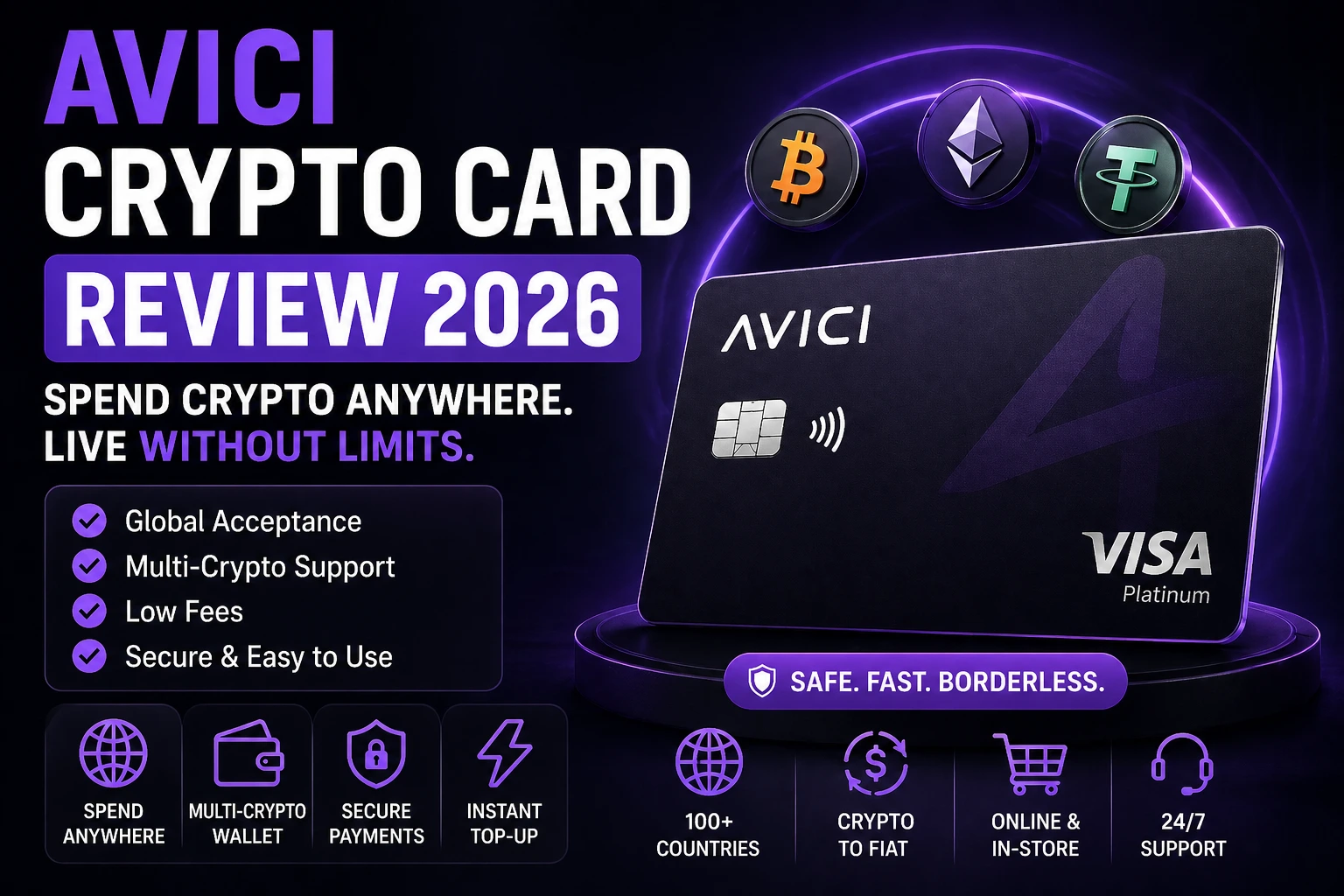
Avici Crypto Card Review 2026: Is Avici.Money Worth It?
The full Avici Crypto Card review — fees, self-custody, Solana speed, real user data, and how it stacks up against every major competitor in 2026.
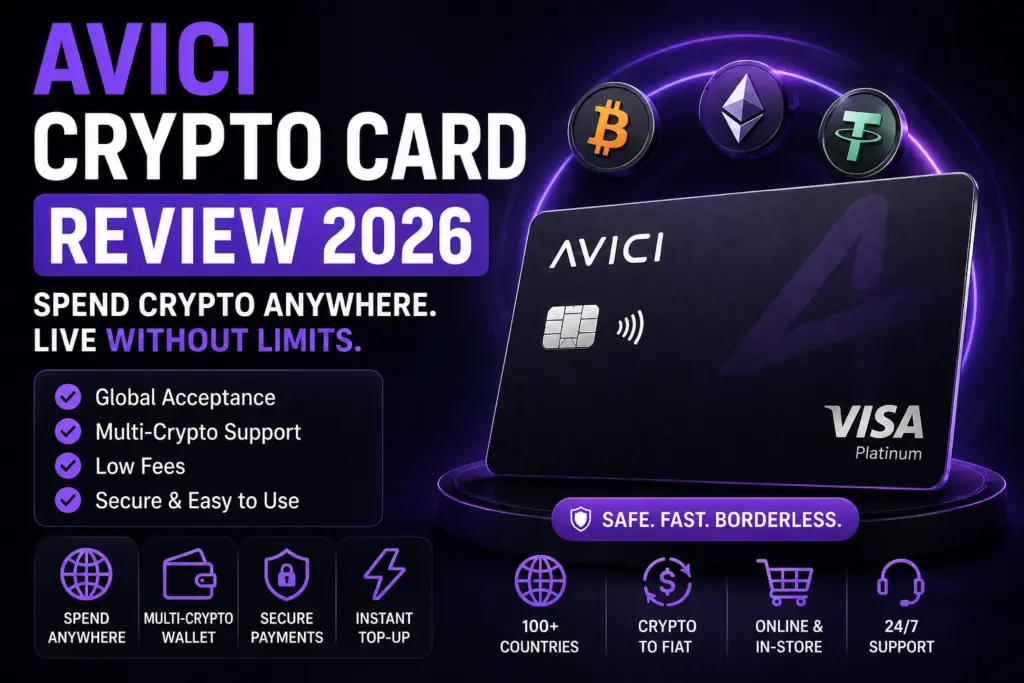
Most crypto cards are a trap. You deposit your funds into a company’s wallet, they issue you a card, and you spend their custodied version of your money. Then FTX happens. Or BlockFi. And your balance becomes someone else’s bankruptcy proceedings.
Avici.Money built the card backwards. Your crypto stays in your wallet — a wallet you control — until the exact second you swipe.
That one idea is either irrelevant to you or the most important thing in crypto right now. If it’s the latter, read on.
What Even Is Avici.Money? (The 60-Second Version)
Avici (pronounced AH-vee-chee, stylized as avici.money) is a Solana-native neobank. It combines a self-custodial smart wallet with a Visa debit card — so you can spend USDC, SOL, ETH, and other stablecoins at any of the 90M+ merchants worldwide that accept Visa, without handing custody of your assets to anyone.
Founded in 2024 by Avici Inc., a Delaware fintech startup, the project raised $3.5M through a community-first token sale via MetaDAO — deliberately skipping the traditional VC-exclusive model. They launched their public beta with physical cards in August 2025. Since then, the numbers have been moving fast: over $1.2M in Visa card spends, roughly 4,000 monthly active users, and 70% month-on-month retention. That’s not vaporware. That’s real spending by real users.
The $AVICI token launched at a $4.5M fully diluted valuation — after the team refunded $31.5M to VCs. That alone tells you something about how they’re building.
How the Avici Smart Wallet Actually Works
Here’s where Avici gets genuinely interesting — and where most reviews stop too early.
The card connects to what Avici calls a Smart Wallet. Not a typical seed-phrase wallet you’d back up on a sticky note. This is a self-custodial smart contract, meaning:
- You authenticate with biometrics or a passkey (FaceID, TouchID, Google login, iCloud) — no 24-word phrase required
- You set programmable policies: daily spending limits, whitelisted addresses, timed approvals, temporary session keys
- Gas fees are sponsored by Avici’s relayer on Solana and Base — so you’re not manually paying $0.003 for every swipe
When you make a purchase, the card settles against Visa in fiat. The equivalent stablecoin amount gets deducted from your smart contract wallet. Transaction history shows both the merchant name in fiat and the crypto amount deducted. Slick.
I ran through the setup on iOS. Virtual card was ready in under 4 minutes. Added it to Apple Pay immediately. The first transaction at a coffee shop went through in under 2 seconds — no gas prompt, no confirmation screen. It felt exactly like using a regular bank card. That’s the point.
Multi-chain support is broader than most people realize. Yes, it’s Solana-native, but the wallet accepts deposits from Ethereum, Polygon, Arbitrum, Optimism, Base, BSC, Avalanche, Mantle, and Scroll. It bridges automatically in the background. You see one unified USDC balance regardless of which chain your assets came from.
Fees, Limits & Real Numbers (No Fluff)
This is where Avici earns the most honest praise.
Zero monthly fees. No staking requirements. No tiered annual plans.
Zero purchase transaction fees. When you swipe the card, Avici doesn’t take a cut beyond Visa’s standard interchange.
Zero FX fees. Spending in Japan, Brazil, or Germany? No 1-3% foreign exchange hit. The rate you see is the rate you get.
Physical card costs:
- Standard shipping: ~$15 US / ~$50 international
- Priority tracked: same rates, faster
Virtual card: Free. Issued instantly. Works with Apple Pay and Google Pay the moment you activate.
Fiat on-ramp: This is an underrated feature. Avici gives you a real virtual USD account (ACH) and EUR account (IBAN). Wire your paycheck directly into your Avici account. It auto-converts to USDC. You’re now living on-chain — with a debit card for the real world.
Cashback: Honestly, near-zero right now. Avici earns interchange on Visa Signature and Infinite tiers (about 1.5-2% when you spend $1,000+) and has signaled that revenue goes back toward user rewards eventually. But if you need guaranteed cashback today — it’s not here yet.
Who Gets the Most Out of This Card
Not everyone needs Avici. Here’s who it’s actually built for:
Solana-heavy holders who want an off-ramp that doesn’t require selling through a CEX first. You hold SOL or SPL tokens, you fund the wallet, you spend. Clean path.
Freelancers paid in crypto who want to receive USDC into a virtual bank account, skip the fiat conversion drama, and spend directly. The ACH/IBAN account makes this workflow stupid simple.
International travelers who’ve been eating 2-3% FX fees on every card swipe abroad. 0% FX changes the math fast, especially if you’re moving between countries regularly.
People who remember FTX. This is the real target market. If you’ve had funds frozen, lost money in an exchange collapse, or simply refuse to trust a custodian with your assets — Avici is built for you. The self-custody model isn’t a feature. It’s the product.
Business users — as of December 2025, Avici launched business cards. Issue cards for your team, marketing budget, or operational expenses. This is early but it’s live.
Avici vs. The Competition
The fairest comparison is Avici vs. Ether.Fi Cash — both are “Smart Wallet” cards pushing away from custodial models.
| Feature | Avici Card | Ether.Fi Cash |
|---|---|---|
| Primary Chain | Solana | Ethereum L2 |
| Spending Model | Debit — converts stables to fiat at swipe | Borrow against collateral, keep earning yield |
| Self-Custody | Yes — smart contract wallet | Yes — smart contract vault |
| Cashback | None (yet) | ~3% + staking yield on unspent funds |
| Best For | Daily spending, Solana users, travelers | DeFi yield farmers, ETH holders |
Ether.Fi wins on rewards today. Full stop. If passive yield and cashback is the primary goal, Ether.Fi Cash is the better card.
Avici wins on simplicity, Solana speed, and no staking requirements. You don’t need to lock up volatile tokens to use it. Just deposit USDC and spend.
Compared to exchange cards like Crypto.com Visa or Binance Card — Avici isn’t in the same category. Those are custodial products. You’re lending your money to a company and hoping they don’t blow up. Avici is structurally different.
What Avici Still Gets Wrong
Being honest here matters.
Cashback is missing. This is the loudest complaint from real users and it’s valid. Competing cards give 3-5% back in tokens. Avici gives nothing on general spending right now. The roadmap promises “Avici Earn” but roadmaps are promises, not products.
Physical card availability is patchy. Virtual card works globally. Physical card and the IBAN/ACH accounts have regional gaps — EU and UK users in particular have reported friction. Verify your country before getting excited.
It’s young. November 2025 had a withdrawal bug that got patched quickly, but it happened. Early-stage products have early-stage risks. Avici has been transparent about it, but transparency doesn’t make bugs fun.
Token support for spending is USDC-first. You can deposit almost any token — they auto-convert to USDC via DEX. But if you were hoping to spend obscure altcoins directly, that’s not the workflow here.
Final Verdict: Get It or Skip It?
Avici.Money is the right card for the right person — and the wrong card if you’re chasing yield.
If sovereignty matters more than rewards to you, get it. The self-custodial model is the most meaningful thing happening in the crypto card space. $1.2M in real-world spending, 70% retention, and a fee structure that’s genuinely competitive — this is a product that actually works.
If you need cashback, wait. Or run both cards: Avici as your primary self-custody daily driver, Ether.Fi Cash for the reward-optimized spending layer.
One thing that’s not debatable: never again park your spending money inside a custodial card from an exchange you can’t verify. The risk isn’t theoretical anymore. Avici exists specifically because that risk destroyed real people’s savings.
Get the virtual card free at avici.money. Use code code111 for 10% off your physical card if you go that route.
What to Do Next
If you’re building automation workflows that handle crypto payments, stablecoin payroll, or DeFi treasury management — this card fits into that stack cleanly. The ACH/IBAN on-ramp is particularly useful for anyone bridging fiat clients into on-chain operations.